If you missed part 1, you may start here.
Scene 3 — The Pattern
(When Sin Became Pattern)
Adam and Eve bear children.
Each child is still created in the image of God.
The 2 remains.
But something else is passed down as well.
Cain and Abel inherit not only life,
but the weight of the fall from their parents.
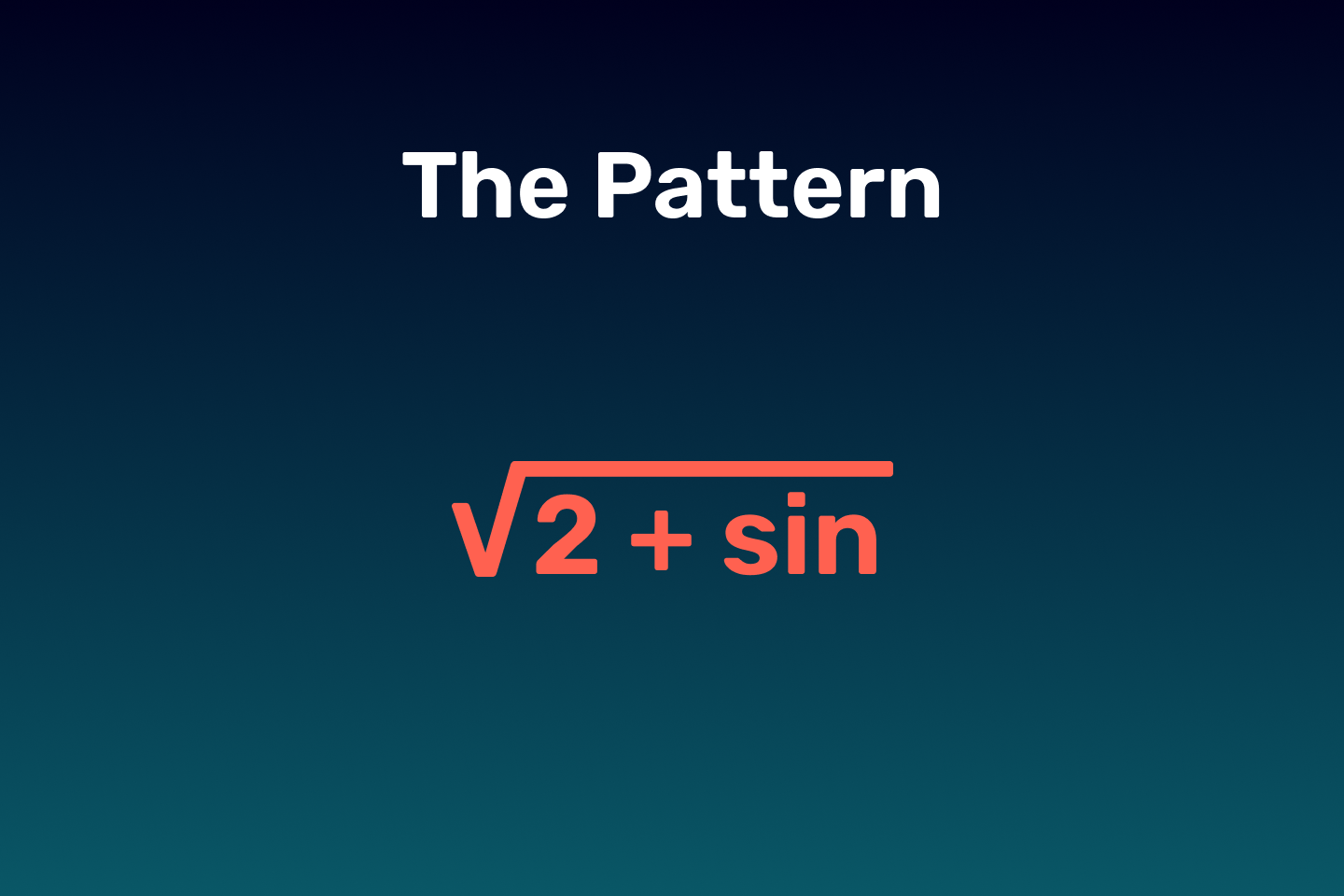
Their denominator is no longer simply 2.
It is:
They are born into God’s image,
plus the inherited distortion ( of the past).
Then they sin.
And when they sin,
the entire expression becomes covered again:
This moment matters.
Sin does not merely add to the next generation.
It encloses.
It reshapes the whole.
What was once a clean ratio
is now layered, nested,
and no longer simple to read.
Here is what Cain and Able's relationship to God looks like:
What will this pattern look like to the next generation after Cain and Abel?
What does the weight of sin look like in future generations?
Scene 4 — The Bend
(When the Roots Multiply)
Now the pattern is set.
Consider the children of Cain and Abel.
They, too, are created in the image of God:
2 below.
God remains unchanged:
2 above.
But they inherit the full expression of what came before.
So their denominator is no longer just the image of God,
nor merely the first fall,
but the combined weight of inherited distortion.
Here is what Cain and Abel's expression look like at birth before sin
And when they sin,
the covering descends again:
From here, the story no longer needs new symbols.
What happens to the children of Cain and Abel
happens to every generation.
The same steps repeat:
inherit → sin → cover.
Each generation adds a new layer,
but the structure never changes.
If we were to write every generation’s contribution,
we would not get a straight line of descent.
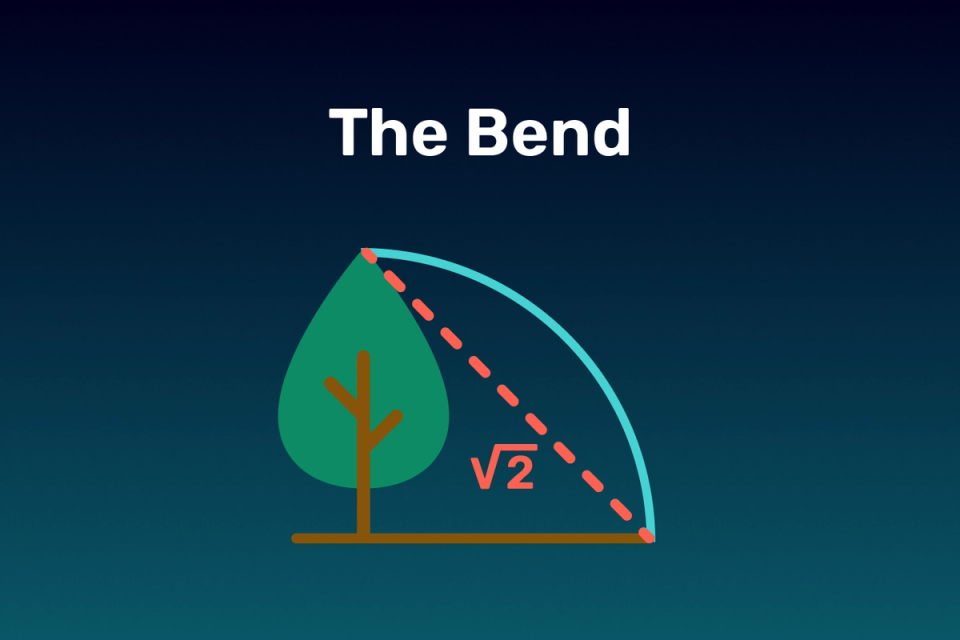
We would get a curve.
We can understand the geometry of the curve by comparing it to the geometry of straight lines.
Three examples of the original relationship
Now let's see the geometry of the curve extend to the next generation.
Two examples of
Now we are ready to appreciate the beauty of the geometry of the curve for the next generation.
Multiplication of Sin to the Next Generation
The compounded weight of sin
does not fall directly downward—
it bends.
Humanity leans under the accumulated burden,
slowly tracing a path away from the garden,
away from the straight line it once knew.
And yet—even here—there is a quiet hint of hope.
The original fall
and the multiplied fall of generations
are still anchored by the same two points.
The place where humanity first turned away,
and the place where the descent seems to press lowest.
There is a bit of beauty in the math even in the weight of the fall
The straight line of the first fall
and the curved path shaped by generations of sin
belong to the same geometry.
The arc is not complete—
but it is suggestive.
It whispers that the story may not end
in endless descent.
It hints that the bending path of sin
is tracing the outline of something larger—
something that could, one day,
be made whole.
In the next part,
we will see what happens when the perfect 2
enters this bending story from above—
not to erase the arc,
but to complete it.
Part 3 — From Separation to Return — coming next.
A note for the math-curious
If you’d like to look more closely,
the images below show what happens
as we multiply the sin patterns of several generations.
Start with the Generation 2 (Cain and Abel)
Zoomed in picture of the next 2 generations
More zoomed in detail
Descending yet further
Each new generation adds another layer,
and the curve inches closer and closer
to a quarter of a circle.
At first glance, the changes seem almost negligible.
Each new fraction barely moves the arc.
Why?
Because the numerator never changes.
It remains 2 every time.
The entire pattern lives in the denominator.
Try it yourself.
Start with
Now add 2 and take the square root again:
Repeat:
Once more:
Do you see what’s happening?
The denominator is creeping closer and closer to 2.
And since the numerator is already 2,
each new generation multiplies the arc
by a number just barely greater than 1.
The movement slows.
The bend stabilizes.
The curve approaches its limit.
The weight of sin accumulates,
but it does not spiral out of control.
It converges.


