Summary of the series and release schedule
Part 1 — Order on a Line
Part 3 — Certainty in a Square
Part 4 —Abundance in the Sky
Part 1 — Order on a Line📏
How the comfort of order begins to crack
"What makes a mathematician is not technical skill or encyclopedic knowledge but insatiable curiosity and a desire for simple beauty. Just be yourself and go where you want to go. Instead of being tentative and fearing failure or confusion, try to embrace the awe and mystery of it all and joyfully make a mess. Yes, your ideas won’t work. Yes, your intuition will be flawed. Again, welcome to the club! I have a dozen bad ideas a day and so does every other mathematician."
Lockhart, Paul. Measurement (p. 10)
The Familiar Line
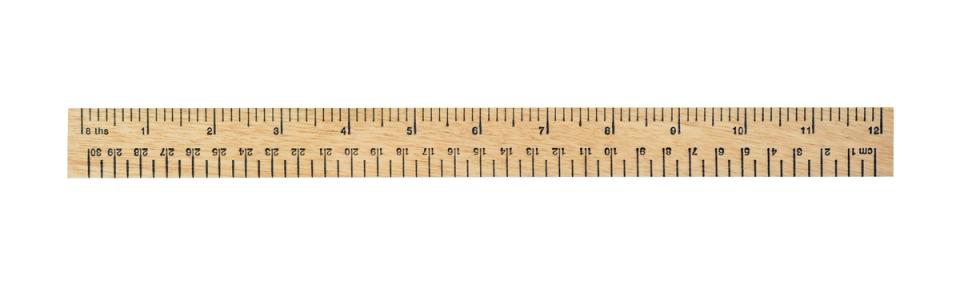
When I first learned numbers, I met them on a line: zero in the middle, one step to 1, another to 2—each tick a small victory of certainty. The number line tamed something deep. It turned “number” into a tool I could hold: measure, compare, decide.
I did the same with God. Prayer as planning, faith as efficiency, Scripture as schedule. God became my ruler—useful, straight, dependable—but mostly mine.
Counting the Whole and the Parts
We first know numbers by counting: one apple, two hands, three friends. These are the integers—solid, predictable. Then come parts of the whole: half an apple, a third of a mile, three-quarters of a cup. Fractions stretch the line between integers. All numbers that can be written as a ratio of whole numbers are rational—from ratio. Orderly. Measurable. Between any two integers live infinitely many rationals. It feels complete.
Reducing God (and Numbers)
The number line felt like pencil on graph paper—clean, grayscale, controllable. It gave me outlines. Beautiful, but still line art. A number line is helpful—but it isn’t number itself. It’s a map of a country I haven’t fully walked. I’d done the same with God—flattening a living reality into a usable picture. Reducing an infinite Deity to a finite transaction.
If I’m honest, I often ran faith like an equation: input prayer, output result. Kindness as a lever; obedience as a way to keep life tidy. Gratitude when the math “worked,” quiet resentment when it didn’t. I treated the Holy One like a system to be optimized—as if the Ancient of Days were a well-labeled ruler on my desk. But love is not a ledger, and eternity won’t fit in a spreadsheet. When I live this way, I get a kind of control, yet I lose the awe.
Black-and-white and color. Rational numbers are wonderfully pragmatic—they give clean outlines and dependable calculations. They’re the black-and-white of arithmetic: necessary, clarifying, safe. What I hadn’t yet seen was the color in between—the irrational values that don’t fit into neat ratios but still belong to the same landscape. My early faith mirrored my math: I prized the pragmatic outlines and missed the living color.
Mathematics hints at a world beyond us: lines that never bend, squares that never warp, truths that don’t expire. We don’t invent them; we discover them. If math can live beyond us, maybe God does too—not a tool in my hands, but the reason reason works. Perhaps math is a whisper of an infinite Creator—and my “useful God” is far too small.
When the Rational World Cracks
For years, the rational world felt safe. But eventually the ground shifted. Under the logic was trust—in people and systems. Like rational numbers, trust seems to fill the line, yet real gaps remain. A miscommunication, a broken promise, a hidden sin—and the foundation shakes. The inputs stop predicting the outputs. The ledger won’t balance. I feel the hollowness of a faith run like bookkeeping. Is there a bedrock more solid than rational trust in each other?
A Mirror in Mathematics
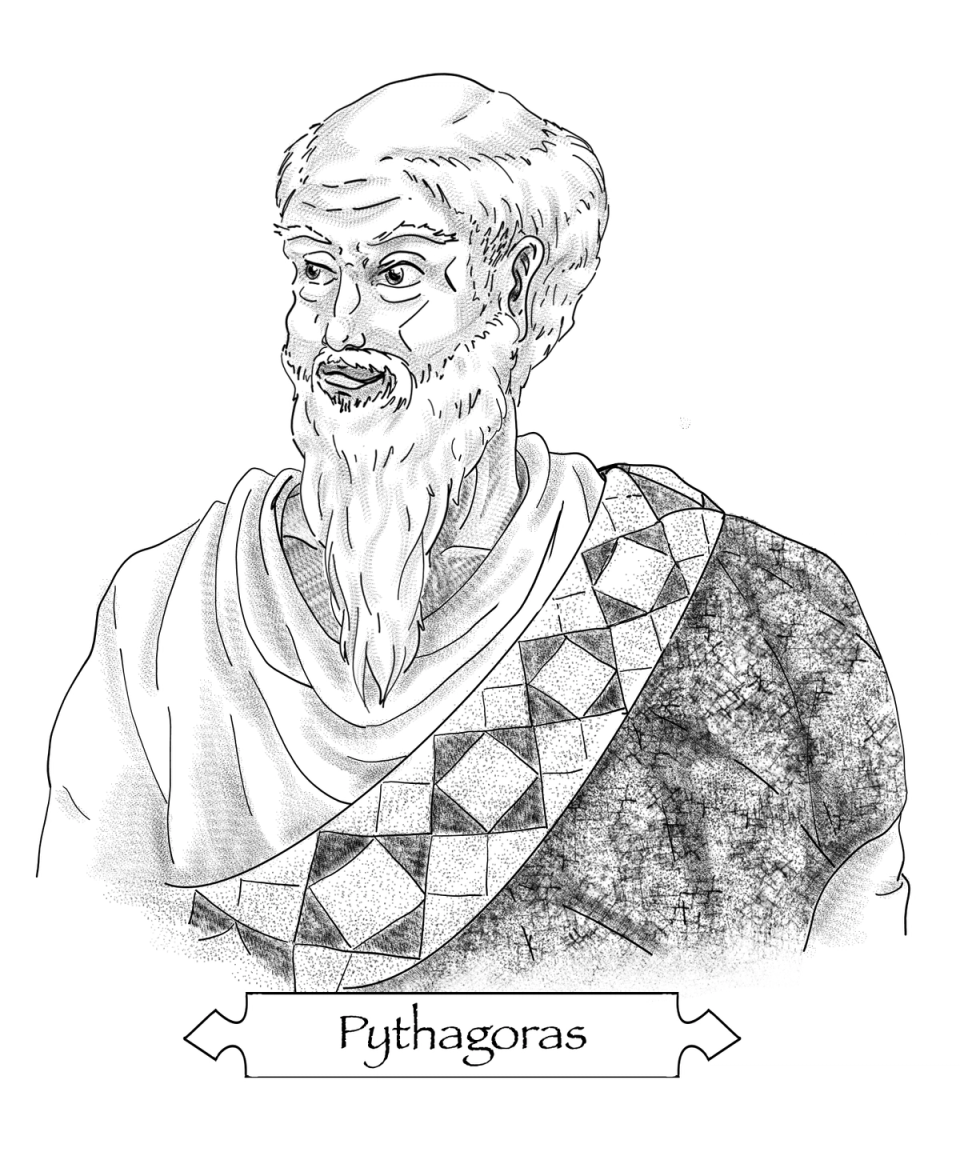
Art work by Carolyn Kester
Pythagoras and his circle found order everywhere—beauty and music explained by ratio. Then came a number that would not fit: irrational. Not a fraction. Not reducible. Tradition says the discoverer paid dearly for revealing it. Whether or not that detail is literal, the point stands: rational harmony cracked. Something on the “line” refused to be captured by the ruler. What kind of number could do that?
The Limits of Looking Deeper
When foundations crack, we tend to zoom in—assign blame, find “the gap.” But on the rational line, zooming only reveals more of the same: between any two fractions lie infinitely many more. No new air. No new space. The way forward isn’t digging deeper in one dimension; it’s adding room for new questions—adding a dimension.
We usually meet fractions like marks on a ruler: halves, fourths, eighths… evenly spaced, tidy, predictable. That’s one honest picture.
Fractional number line
But there’s another way to watch fractions arrive. Consider the sequence
These don’t march by 1/2 → 1/4 → 1/8. Instead, they hug an unseen value, alternating above and below, drawing tighter each time. Zooming in on the line just shows the approach in finer detail—it doesn’t reveal a “missing tick.” To find new air, we won’t dig further into the line; we’ll change perspective.
Special fractions that zoom in
Toward Part 2 — When Points Leave Single File
A number line looks sturdy, but it’s really just points in single file—a tidy queue we’ve agreed to call “order.” What if we kept the same points and simply stopped lining them up?
Picture a night sky: the points spread out, no longer elbow-to-elbow on a narrow path. They’re still the same points—just not in a row. Now the question isn’t “what comes next?” but something deeper:

Creating space for a fresh perspective of order
- How would we organize these points to create a sense of order?
- What does “near” or “same” mean when points aren’t forced into before-and-after?
- How do we know we’ve included every point we meant to include?
Maybe “reasonable” isn’t less than logic but more—a wider wisdom that’s gentle, fair, and shaped by mercy, the way a sky can hold countless stars without collapsing them into a line.
Next: We don’t need new points; we need a new plane. The same fractions that felt like ticks on a ruler might reveal more when they’re allowed to breathe. Do you have a need for more space?
A fresh way to view fractions (in 2D)
See Part 2 - Wonder in an Arrow